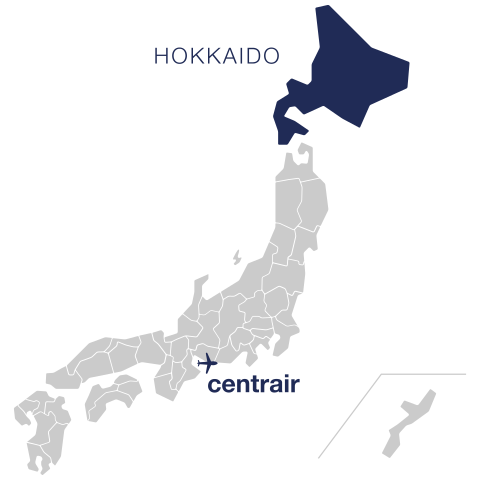
HOKKAIDO・Asahikawa city
Otokoyama Kuniyoshi-no-natorisake
おとこやま くによしのなとりざけ / Otokoyama Kuniyoshi-no-natorisake
Tokubetsu
Junmai
A sake made in an ideal, cold climate with the firn-derived underground water of the Daisetsuzan Volcanic Group, which is located at the center of Hokkaido. It is a re-creation of a sake enjoyed by the historical Ako Roshi (forty-seven samurai). It's a very dry sake with crispness and richness of umami. (An ukiyo-e piece by Utagawa Kuniyoshi is on the label.)
- Sake brewery
-
男山株式会社
- Otokoyama Co.,Ltd. -
Flavor profile
Recommended temperature
chilled
room temperature
Heated
Sake vessels

Use a sake cup with straight sides to enjoy the light and clean sake.
Food pairing
Sashimi, sushi, raw oysters with vinegar, salt-grilled fish, simmered bamboo shoots, oden (a type of hot pot with miso broth), squid and shrimp stir fry seasoned with salt, braised white fish, butter-sauteed white fish, white fish in shredded potato, oyster and watercress risotto, sauteed scallops, escargot, etc.
Sake profile
| Prefecture | HOKKAIDO |
|---|---|
| Municipality | Asahikawa city |
| Type of sake | Tokubetsu Junmai |
| Ingredients | rice , rice koji |
| Sake rice | Miyama Nishiki (美山錦) |
| Location of sake rice production | Akita prefecture |
| brewing water | The Daisetsuzan Volcanic Group's underground water (medium hard water) |
| Rice polishing ratio | 55% |
| Acl / Vol. | 15% |
| NihonshudoSake meter value | +9 |
| Flavor | Very dry |
Type of sake
Rice polishing ratio
50% or lower
Rice polishing ratio
60% or lower
Rice polishing ratio
70% or lower
Rice polishing ratio
80% or lower
Junmai
Daiginjo
Junmai
Ginjo
Tokubetsu
Junmai
Junmai
Daiginjo
Ginjo
Tokubetsu
Honjozo
Honjozo
Futsu