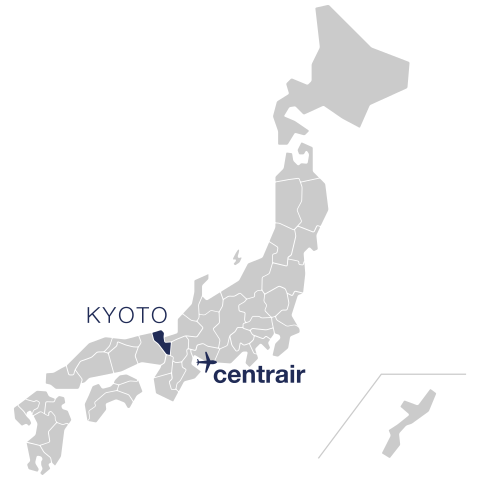
KYOTO・Kyoto city
Hanasyoufu Daiginjyou Kizakura
はなしょうふうだいぎんじょう きざくら / Hanasyoufu Daiginjyou Kizakura
Daiginjo
The brewery spends three full days polishing Yamada Nishiki, a rice suitable for sake making, to a 35% sake polishing ratio. The rice is then soaked and steamed following a strict schedule. This is followed by the koji produdction (mixing koji mold with each grain of sake rice) by the toji (sake master), who stays up two full days for the process. He then uses Kizakura's original ginjo kobo (yeast) to ferment at a low temperature (at 10 degrees celcius or lower) for about 30 days. This daiginjo is indeed a product of attentive care. Its aroma is gentle and fragrant like a flower, and it has a smooth texture.
- Sake brewery
-
黄桜 株式会社
- Kizakura -
Flavor profile
Recommended temperature
chilled
room temperature
Heated
Sake vessels

A glass that widens at the rim is recommended in order to maximize the fragrance.
Food pairing
This fragrant and umami-filled sake pairs well with a wide variety of dishes, from subtle-flavored ones that bring out the ingredients' natural flavor, to bold, umami-filled ones. Some examples include, white fish sashimi, carpaccio, blanched greens, salt-grilled fish, olives, and tara-no-me (Japanese angelica-tree shoots). The sake is best matched with appetizers.
Sake profile
| Prefecture | KYOTO |
|---|---|
| Municipality | Kyoto city |
| Type of sake | Daiginjo |
| Ingredients | rice , rice-koji , brewers-alcohol. |
| Sake rice | Yamada Nishiki (山田錦) |
| Location of sake rice production | Hyogo prefecture and others |
| brewing water | Underground water (medium hard water) |
| Rice polishing ratio | 35% |
| Acl / Vol. | 16% |
| NihonshudoSake meter value | ±0 |
| Flavor | Slightly sweet |
Type of sake
Rice polishing ratio
50% or lower
Rice polishing ratio
60% or lower
Rice polishing ratio
70% or lower
Rice polishing ratio
80% or lower
Junmai
Daiginjo
Junmai
Ginjo
Tokubetsu
Junmai
Junmai
Daiginjo
Ginjo
Tokubetsu
Honjozo
Honjozo
Futsu